
Economic Inactivity in the UK:
Where does the blame lie?
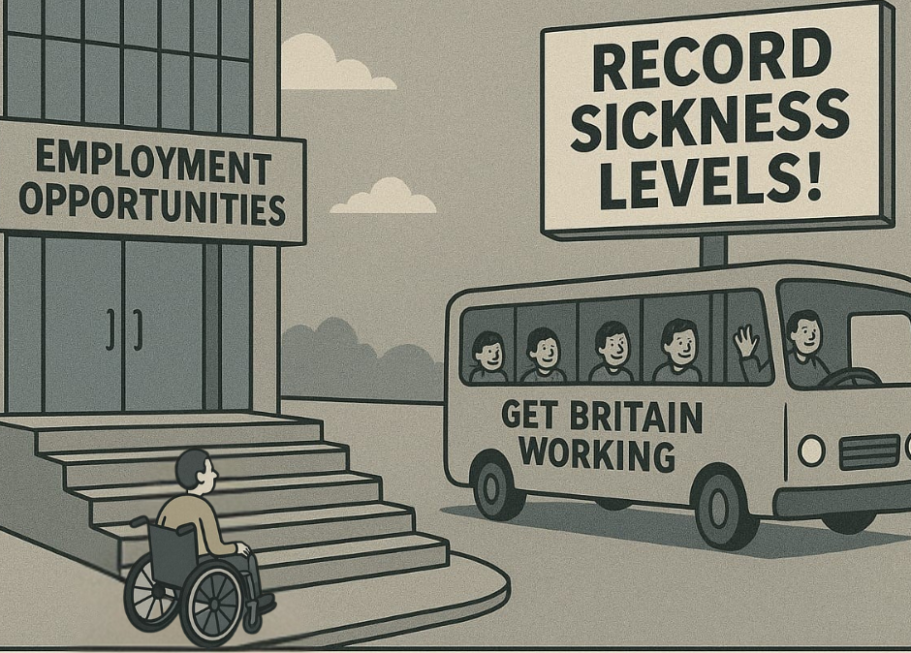
Exploring the real causes behind rising sickness and workforce absence.
According to the Government’s Keep Britain Working, Final Report, the UK is facing an economic inactivity crisis. Ill health is identified as the most significant driver, with 2.8 million working-age people inactive due to health conditions, a 40% rise since 2019. It’s also worth noting that the recent increase in the pension age naturally expands this data set, contributing to the higher overall figure.
🔗 Keep Britain Working – Final Report
The UK Government is currently developing its Get Britain Working White Paper, with much public discussion focused on cutting welfare for those with disabilities and concerns about fraud.
However, according to the Government’s 2025 statistics on fraudulent disability claims:
PIP (Personal Independence Payment)
Overpayments due to fraud: 0.4%
All benefits combined (Universal Credit, State Pension, PIP):
Overpayments due to fraud: 2.2%
🔗 DWP – Fraud and Error in the Benefit System, Financial Year 2024–2025
On the balance of probabilities, this suggests that most people who are currently long-term economically inactive due to sickness are, in fact, genuinely sick. The primary barriers to re-entering the workforce are not fraud or unwillingness, but disability, chronic illness, and workplace inaccessibility. Many roles still fail to adapt to include people with fluctuating or long-term conditions.
What Factors Contribute to Long-Term Economic Inactivity?
Our society is in the midst of a digital transformation, where identity, communication, and daily life are increasingly conducted online. We can now shop, socialise, and even work from home. The pandemic accelerated this shift, teaching us to navigate life from inside our homes and to ease loneliness through digital connection.
While this digitalisation offers convenience, it also marks a departure from organic, face-to-face social connections, which can have lasting impacts on mental health and behaviour. For individuals already isolated through illness or disability, the effect can be profound.

Our mental, physical, and emotional health is deeply interlinked, each capable of improving or worsening the other. Stress can trigger flare-ups of chronic conditions such as Crohn’s disease, arthritis, or gastrointestinal disorders. Physical illness, in turn, can affect brain function, increasing the risk of anxiety or depression. When these states of instability persist, it becomes harder for individuals to regain control of their health long enough to re-enter the workforce.
Access to stabilising healthcare is another major challenge. Long NHS waiting lists and limited integrated care mean many suffer longer without treatment, increasing the likelihood of compounding health issues. Without holistic treatment, progress in one area of health often leads to a decline in another.
🔗 NHS England – Waiting List Breakdowns to Tackle Health Inequalities
The Financial and Environmental Pressures
The UK’s financial landscape adds another layer of complexity. The ongoing cost-of-living crisis means many people cannot adequately heat their homes or afford the nutrition required for recovery, particularly those on specialist diets. Rising rents and utility costs add strain to both emotional and physical well-being.
Climate change further compounds this: warmer, wetter summers and colder, damp winters make mould and poor indoor air quality more common, while many cannot afford the energy needed to maintain a consistent, healthy temperature.
Given these intersecting pressures, it’s unsurprising that long-term economic inactivity among people with health conditions continues to rise. We should not blame the sick for being sick or for remaining unwell longer in a system that makes recovery harder.
Impact On The Care Sector
As outlined in our previous discussion on Winter 2025 – Pressures in the Care Sector, increased demand and spiralling costs have placed services under intense strain. Recruiting skilled professionals and attracting the next generation of carers remains a challenge.
Until the sector can relieve pressure, offer rewarding career pathways, and create workplaces that adapt to individual needs, the outlook suggests there will not be enough new entrants to meet the growing demand.
Moving Forwards– Together

Current data and analysis indicate that the rise in long-term economic inactivity is a systemic issue, not an individual one.
A punitive or stigmatising approach towards those affected risks widening inequality and deepening the root causes.
Instead, the UK could benefit from cross-sector collaboration, integrating not just health and care services, but also aligning business, education, and community initiatives to create a seamless exchange of skills and support.
Economic stability relies on every sector fuelling the next. Each field holds distinct expertise: if one sector faces barriers such as staff shortages or inadaptable practices, another may already possess solutions or insight. Sharing that knowledge can spark innovation where it’s needed most.
The same principle applies to individuals. Each person holds unique strengths and perspectives that, when recognised and combined, form the foundation of collective progress.
Collaboration, across sectors and people alike, may well be the key to restoring both economic health and human well-being.